
BUILDING HOPE: Ending Homelessness in Maine is a free film with a in person live panel discussion moderated by film producer Melody Lewis-Kane and introduced by film director Richard Kane. The panel consists of: Donna Kelley, President and CEO of Waldo Community Action Partners; Anne Schroth, Executive Director of Healthy Peninsula; and Sharon Catus, Senior Major Gift Officer, Northern Light Health Foundation.
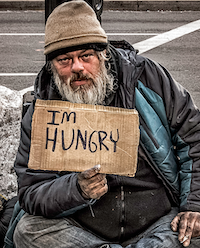
BUILDING HOPE tells audiences that there is hope to ending the suffering of homelessness. The film begins with the story of Aneyva, a 30-year old woman with two children, a former early childhood educator with two college degrees. The pandemic caused her to lose her job, her home, and her children and she now lives in Bangor’s Tent City, homeless. This encampment has been torn down every December for the past three years!
Amelia, an employed, hard working contractor, suffered the trauma of domestic violence leading to her loss of housing. After two years of homelessness with her high school-aged daughter, she found the help of Homeworthy (formerly the Knox County Homeless Coalition) and now has a home, continues in her job, and has re-started her apothecary business.
James, whose grandmother found him a paper route, was making $100/week. His friends selling cocaine were making $500/day. The money was enticing. So he went to work delivering drugs which led him to being “popped by the cops”. He spent nearly 25 years in prison. Homeless when released he found help with a Housing Navigator from Bangor Area Homeless Shelter. Now, with the help of a government Section 8 voucher, he has an apartment in Bangor owned by Community Housing of Maine (CHOM) and a job at Chipotle.
BUILDING HOPE explores these stories and more of those caught in the daily crisis of homelessness. With the help of leading state advocates, many have risen above their circumstances to find housing and jobs and are becoming productive members of society. Others, due to a shortage of affordable housing, poverty, mental illness and substance use disorder, have yet to succeed.
Today, due to the virtual disapperance of federally funded (HUD) housing vouchers the situation is even more dire. The film explores the whys and hows our society can heal the suffering. Maine’s former Speaker of the House Rachel Talbot Ross talks about her own vulnerabilities growing up, and, with the $30 million dollars that she has led the state legislature to invest in affordable housing, there is some hope. Maine’s Independent U.S. Senator Angus King addresses the inadequacies of our minimum wage and the government tax incentive bills he co-sponsors to give confidence to developers to create affordable housing and emergency shelters. Developer Kevin Bunker, the force behind building Portland’s new Homeless Services Center and Asylum Seekers Center, talks about the root causes of inequality in our system. Preble Street’s director, Mark Swann, laments over Portland’s sweeps of encampments, yet his hope “springs eternal.” Community Housing of Maine’s director, Cullen Ryan, makes crystal clear the damage that is done both to individuals without housing and to our society as a whole, and yet, “there is hope”.
A “voice from poverty”, Dr. Donna Beegle, closes the film with the plea: “There’s nothing that matches making a difference for your fellow human beings. … Let me use what’s in my hands … to see if I can’t leave you in a better place.”
We can all make a difference. There is hope.